Wednesday, October 27, 2010
Where to start, where to end?
I am nearing the end of my section on privilege, putting final concepts and reflections together. Yet, it's still a bit jumbled. This can be extremely frustrating, yet rewarding. It's like solving coded messages, so that you may later know what's on the decoder ring. Although a few weeks may seem like a good amount of time, it never is. These packet due dates always just seem to appear.

Wednesday, October 20, 2010
Shocked and or Appalled
While reading White Like Me, I came across a disturbing tid-bit of news. A man and his wife had traveled to the ER of St. Thomas Hospital. The wife was in desperate need of heart surgery. This was the third hospital that they had gone to that night. The reason behind the hospital jumps lies in bigotry.
The husband had a specific demand that no black person be allowed in the OR. His reasoning is that he did not want a black person to see his wife naked.

Whhhhhhaaaaaaatttt???!
As absurd and disturbing as this request was this put the hospital in a precarious situation. Do they honor a clearly racist request, or chance this woman's life to her husband's wanderings?One doctor ultimately agreed, and the surgery was performed under the conditions stated.
Not surprisingly, the Hospital took a lot of heat for allowing this to happen. The doctor, and the Hospital apologized, and the media slowly subsided.
The question that was posed to the Hospital troubled me. What do you do in that situation? I did what I do anytime I have a medical question, I ask my Mom.
My mother is a medical professional of 25+ years, she generally has all the answers to any medical question I pose- administrative or otherwise. Her response put it in a bit more perspective. I asked her if the hospital should have gotten in trouble for their actions. I mean, a woman's life was on the line.
She explained that they deserved what they got because what they did was unethical. The husband's request was unethical, and to honor it was in turn unethical. She said that any of the hospitals he visited could have performed the procedure without his knowledge of the race of the surgeons. They could have just lied.
Given the situation, this does seem to be the route. But then it raises the question: Is it okay to lie for the greater good?
And who determines this good? Which raises one of the main problems within social change. How do you make decisions to heal the problems of the world when it could be at the expense of those you're trying to save?
This story is a metaphor, upon an enigma.....and my brain already hurts just thinking about it.
The husband had a specific demand that no black person be allowed in the OR. His reasoning is that he did not want a black person to see his wife naked.

Whhhhhhaaaaaaatttt???!
As absurd and disturbing as this request was this put the hospital in a precarious situation. Do they honor a clearly racist request, or chance this woman's life to her husband's wanderings?One doctor ultimately agreed, and the surgery was performed under the conditions stated.
Not surprisingly, the Hospital took a lot of heat for allowing this to happen. The doctor, and the Hospital apologized, and the media slowly subsided.
The question that was posed to the Hospital troubled me. What do you do in that situation? I did what I do anytime I have a medical question, I ask my Mom.
My mother is a medical professional of 25+ years, she generally has all the answers to any medical question I pose- administrative or otherwise. Her response put it in a bit more perspective. I asked her if the hospital should have gotten in trouble for their actions. I mean, a woman's life was on the line.
She explained that they deserved what they got because what they did was unethical. The husband's request was unethical, and to honor it was in turn unethical. She said that any of the hospitals he visited could have performed the procedure without his knowledge of the race of the surgeons. They could have just lied.
Given the situation, this does seem to be the route. But then it raises the question: Is it okay to lie for the greater good?
And who determines this good? Which raises one of the main problems within social change. How do you make decisions to heal the problems of the world when it could be at the expense of those you're trying to save?
This story is a metaphor, upon an enigma.....and my brain already hurts just thinking about it.
Tuesday, October 19, 2010
Madeline Levine and the Price of Privilege
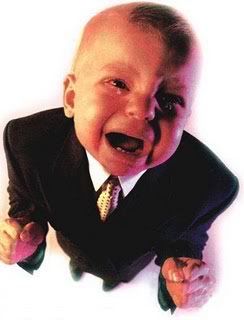
Yesterday I took a departure from my readings to watch a lecture by Madeline Levine. Levine is an adolescent psychologist whose clients are generally from affluent backgrounds. In her book, The Price of Privilege, she attempts to decipher why some many how these children fall into emotion problems.

The rate of depression for a high-schooler from an affluent background is three times higher than the national average. The likelihood of substance abuse is 50% more as well.
Although this issue has many psychological triggers and issues, it is a part of a larger social problem. Or rather, it is the result of it.
There is an old saying that "it takes a village to raise a child", whether or not you subscribe to this theory or not, the village plays a role in child rearing. The "village" as it were, being modern society.
When we propagate the importance of achievement over self-worth, we create this divide. These children demonstrate social skills and academic prowess, yet they suffer from a mis-developed sense of self.
Yet, many people don't really care. The common thought is "Why should I care about these kids how have everything, all the opportunity. Who cares if they are depressed?"
These kids go on to hold many vital positions of authority. When we allow this culture to further enforce performance(grades, after school activities) over character and value, we allow this sense of self to deteriorate. As a result, their misery becomes our misery.
"FORA.tv - Madeline Levine." FORA.tv - Videos on the People, Issues, and Ideas Changing the Planet. Web. 18 Oct. 2010..

The rate of depression for a high-schooler from an affluent background is three times higher than the national average. The likelihood of substance abuse is 50% more as well.
Although this issue has many psychological triggers and issues, it is a part of a larger social problem. Or rather, it is the result of it.
There is an old saying that "it takes a village to raise a child", whether or not you subscribe to this theory or not, the village plays a role in child rearing. The "village" as it were, being modern society.
When we propagate the importance of achievement over self-worth, we create this divide. These children demonstrate social skills and academic prowess, yet they suffer from a mis-developed sense of self.
Yet, many people don't really care. The common thought is "Why should I care about these kids how have everything, all the opportunity. Who cares if they are depressed?"
These kids go on to hold many vital positions of authority. When we allow this culture to further enforce performance(grades, after school activities) over character and value, we allow this sense of self to deteriorate. As a result, their misery becomes our misery.

"FORA.tv - Madeline Levine." FORA.tv - Videos on the People, Issues, and Ideas Changing the Planet. Web. 18 Oct. 2010.
Thursday, October 14, 2010
How privilege occurs
How does privilege happen: as a consequence of the social system that we live. People make these systems, but are not the system itself. However, the systems would cease to exist without participants. A social system can be a lot of different things: a university, workplace, family etc.
These systems are created, or developed based on the actions of those involved with it. The participation of this system can be unique for the individuals involved. For example, two students could attend the same university. One could have an “A” average , while the other could be failing.
Although the both attend the same school, their experience within this social system would be quite different. Your grade in Academia, is generally the standard they hold of you,and your work. Having a lower grade than the other student may mean that they are not as educated, but it could be for a number of other reasons. These reasons could include poor attendance, more intense classes, etc. So, we have two individuals involved with a social system, with different experiences within it.
Social systems make up the relationships we maintain, and the world that we live in. But, because social systems have rules that result in distinctions between individuals, certain privileges arise.
For instance, if I were to walk down the street backwards, this would cause a bit of a stir. Not that walking backwards would cause fear, or be intimidating. But people within the social system of community, would not be use to this behavior.
Following the norm is what gives you privileges within social systems. We reward the expectable experience.
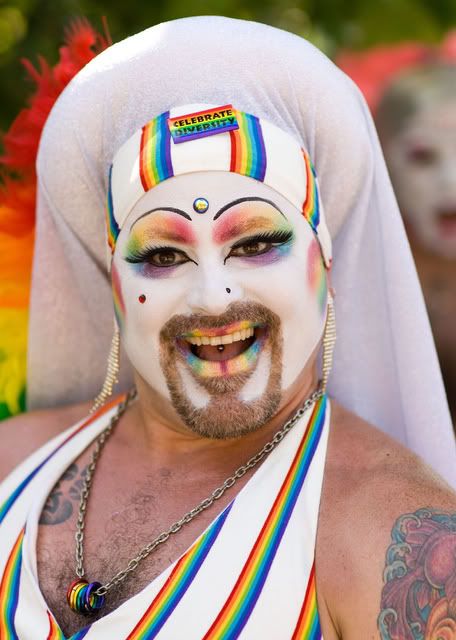
When we encounter “otherness” it can frighten, startle, arouse, or even enrage. But in modern society, what do we accept, and what do we shun? More importantly, to whose benefit do we do this?
These systems are created, or developed based on the actions of those involved with it. The participation of this system can be unique for the individuals involved. For example, two students could attend the same university. One could have an “A” average , while the other could be failing.
Although the both attend the same school, their experience within this social system would be quite different. Your grade in Academia, is generally the standard they hold of you,and your work. Having a lower grade than the other student may mean that they are not as educated, but it could be for a number of other reasons. These reasons could include poor attendance, more intense classes, etc. So, we have two individuals involved with a social system, with different experiences within it.
Social systems make up the relationships we maintain, and the world that we live in. But, because social systems have rules that result in distinctions between individuals, certain privileges arise.
For instance, if I were to walk down the street backwards, this would cause a bit of a stir. Not that walking backwards would cause fear, or be intimidating. But people within the social system of community, would not be use to this behavior.
Following the norm is what gives you privileges within social systems. We reward the expectable experience.

When we encounter “otherness” it can frighten, startle, arouse, or even enrage. But in modern society, what do we accept, and what do we shun? More importantly, to whose benefit do we do this?
Tuesday, October 12, 2010
Intro to Section III
After closing out my study on Black America, I am moving onto to bit of a hectic study. This study being privilege, assumed stereotypes within privilege, and its relation to the class system.
The class system is going to be the fourth section. The class system itself could be a endless study, but for the sake of the semester's work(and my sanity) it's going to have its own section entirely.
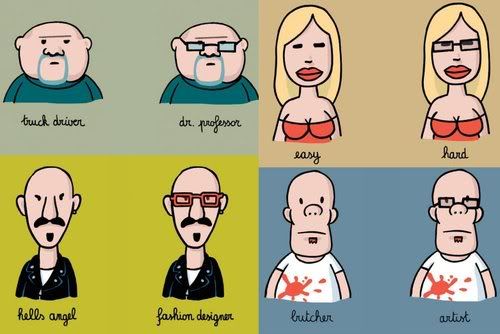
The focus of this section will be a deeper look into how perception plays out socially. More specifically, what you think about when you see this.

I am curious to see what the perceptions surrounding this topic lead.
Context and objectivity can be everything, but does that change how people treat us?
The class system is going to be the fourth section. The class system itself could be a endless study, but for the sake of the semester's work(and my sanity) it's going to have its own section entirely.
The focus of this section will be a deeper look into how perception plays out socially. More specifically, what you think about when you see this.

I am curious to see what the perceptions surrounding this topic lead.
Context and objectivity can be everything, but does that change how people treat us?

Wednesday, October 6, 2010
"Sha-Clack-Clack" Saul Williams
"If I could find the spot where truth echoes
I would stand there and whisper memories of my children’s future
I would let their future dwell in my past
so that I might live a brighter now
Now is the essence of my domain and it contains
all that was and will be
And I am as I was and will be because I am and always will be
that nigga
I am that nigga
I am that nigga
I am that timeless nigga that swings on pendulums like vines
through mines of boobytrapped minds that are enslaved by time
I am the life that supersedes lifetimes, I am
It was me with serpentine hair and a timeless stare
that with immortal glare turned mortal fear into stone time capsules
They still exist as the walking dead, as I do
The original sulphurhead, symbol of life and matriarchy
severed head Medusa, I am
I am that nigga
I am that nigga!
I am that nigga!!
I am a negro! Yes negro, negro from necro meaning death
I overcame it so they named me after it
And I be spitting at death from behind
and putting “Kick Me” signs on it’s back
because I am not the son of Sha-Clack-Clack
I am before that, I am before
I am before before
Before death is eternity, after death is eternity
There is no death there’s only eternity
And I be riding on the wings of eternity
like HYAH! HYAH! HYAH! Sha-Clack-Clack
but my flight doesn’t go undisturbed
Because time makes dreams defer
And all of my time fears are turning my days into daymares
And I live daymares reliving nightmares
of what taunted my past
Sha-Clack-Clack, time is beatin my ass
And I be havin dreams of chocolate covered watermelons
Filled with fried chickens like pinatas
With little pickaninny sons and daughters
standing up under them with big sticks and aluminum foil
Hittin em, tryin to catch pieces of fallin fried chicken wings
And Aunt Jemima and Uncle Ben are standing in the corners
with rifles pointed at the heads of the little children
“Don’t shoot the children,” I shout, “don’t shoot the children!”
but they say it’s too late
They’ve already been infected by time
But that sh** is before my time
I need more time
I need more time
But it’s too late
They start shooting at children and killing them!
One by one, two by two, three by three, four by four
Five by five, six by six, but
my spirit is growing seven by seven
Faster than the speed of light
Cause light only penetrates the darkness that’s already there
and I’m already there
I’m here at the end of the road
which is the beginning of the road beyond time, but
where my niggaz at? (Oh sh**!)
Oh sh**, don’t tell me my niggaz got lost in time
My niggaz are dying before their time
My niggaz are serving unjust time
My niggaz are dying because of.. time"
Sunday, October 3, 2010
A bit lighter,a bit bolder
Things aren't all grim in black-social commentary-land.
There's always the world of animation.

With the contrasting archetypal characters of society,up to the minute slang and references to popular culture this show has it all-including media backlash.
The show centers around two brothers Huey and Riley Freeman.
Huey(named after Huey P. Newton,co-founder of the black panthers) is an Afrocentric freedom fighter. Complete with black power glove of justice.
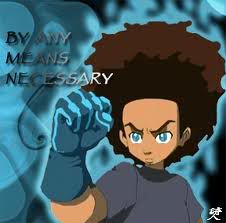
Huey often quarrels with his younger brother Riley(Huey's gangster-lifestyle-promoting contemporary).

The show covers everything from the R. Kelly trail, the election of Obama, to serious analysis of the self-proclaimed “Black Entertainment Network.”
Although critics like Al Sharpton say that the show is polluting social opinion it does quite the opposite. It raises the questions and conversations that are necessary for the “post-modernism” that hooks stresses for social change.
The more we are afraid to talk about the issues,the less will ever get done.
There's always the world of animation.

With the contrasting archetypal characters of society,up to the minute slang and references to popular culture this show has it all-including media backlash.
The show centers around two brothers Huey and Riley Freeman.
Huey(named after Huey P. Newton,co-founder of the black panthers) is an Afrocentric freedom fighter. Complete with black power glove of justice.

Huey often quarrels with his younger brother Riley(Huey's gangster-lifestyle-promoting contemporary).

The show covers everything from the R. Kelly trail, the election of Obama, to serious analysis of the self-proclaimed “Black Entertainment Network.”
Although critics like Al Sharpton say that the show is polluting social opinion it does quite the opposite. It raises the questions and conversations that are necessary for the “post-modernism” that hooks stresses for social change.
The more we are afraid to talk about the issues,the less will ever get done.
Friday, October 1, 2010
Willie Dynamite: Pimps,Hoes,and Fur

There's no doubt that we all face a great deal of conditioning. Without it,we wouldn't even know to call ourselves “black”, “white”, or anything else. Conditioning is ,traditionally passed down from parent to child;friend to friend; man to man. However, with the rise of technology, we have so much more exposure to other stimuli and influence. From our :television, phone, or mp3 player; We're plugged in.
So with the messages of our friends,loved ones, favorite performer, floating about through our day, how do we form an opinion. Let's start with movies. More specifically, hyper-personified “reality” based movies.
Taking a break from reading hooks and Williams, I figured I'd “field” investigate so to speak. And what better place to start then the blaxplotation films of the 70's. After looking through the scattered history, reading bios, etc I choose Willie Dynamite.
With larger than life characters,costumes, and glitter. The costume designer probably broke a thumb bedazzling this movie.
It promotes crime as business, indulgence, and other hedonistic endeavors. However it does end on a somber note. The social worker(as self-proclaimed Ralph Nader for hooker) helps a hooker who decides to “leave the game” a bit too late, and a broke Willie Dynamite.
Although many feel that these movies never should been made. There's a lighter note that not many people consider.
I browsed around blacktree.tv and found a film the served as a loving homage to blaxplotation featuring the great Arsenio Hall.
http://my.blacktree.tv/profiles/blogs/arsenio-hall-amp-michael-jai
In the interview they explain,and defend, their stance on the genre.
Blaxplotation helped to save Hollywood. They were cheap to produce, cheap to write, and made a lot at the box office.
Although the images and ideals of these films is usually not very conducive to a productive lifestyle. There were at least black. They were real live black people on screen, living life, not just being maids. It's not the best role,but it's a start.
Subscribe to:
Comments (Atom)