Today I decided to see what was on television. I haven't really seen anything, because of school work,errands, and other responsibility.
A lot of my friends no longer watch any of it because of how slanted the representations are. But I think it is important to watch for this reason. Perception is reality, so what messages are we sending out as a nation, people, and society?
Past the commercials urging you to purchase your happiness, I found another great example of this. I found a program on the History channel called “Gangland”.
In this program are scattered accounts of gang violence and culture presented by rappers, journalist, law enforcement, and former gang members.
In theory, this should provide an unbiased account of this culture, but it only further the stereotypes that propel the culture into prosperity.
The journalist even went as far as to say that they were devoid of human emotions.
Fear mongering, mixed with greed propel the cycle to continue. When we only air the killing, drugs, and our rejection of this as a society, we only further the problem. Why do we always allow ourselves to shortchange our own intelligence in this manner.
The contexts of subcultures are always in reaction to the public at large. We cannot reject these people, as simply not being people because it makes it us-but more importantly makes us feel better.
Friday, December 3, 2010

Tuesday, November 30, 2010
Buffet History
History is always told to be the key into understanding the complexities of the present by turning to the past.
Conflict and Acts of Self-righteous Justice are two of the oldest actions that we as a people take upon another group of people. Whether it be between classes, nations, or religions, History provides us we precedences that can help us make a decision toward the eradication or advancement of such actions.
But when we omit, dilute or other wise tamper with History, how does that affect the outcome of or judgments, or even or identity as a nation?
Even if we start at the beginning of “our History”, we cannot get more than a few pages in without seeing glaring disparites.
We generally begin by stating that Columbus “discovered” America, even though we acknowledge that there were other inhabitants on the land prior to.
This is just the beginning in the ethnocentric interpretation that we allow to be called our “History.”
There is much dispute as to who actually discovered North America, discovered in the context, that they were the first to arrive.
Some say it was the Africans, some say the Norse, some even say that inhabitants of Asia came over as far back as BC. It is an issue of much debate for anthropologists, geologists, and historians alike. But what is not disputed is that it was not Columbus.
Now it could be stated that we use Columbus because it is a solid fact, to which we can rely on and teach to our children-that Columbus did in fact go there. However, there is so much we don't even know about Columbus himself.
His origins, purpose, and likeness are all undetermined. But what we do know is the slaughter he created in Hispaniola.
What we also know, is that he helped bolster the slave trades to such propositions that it helped to wipe-out many Caribbeans, Africans, Cubans, and other natives.
Accelerating the slave market, and the amount of foreign currency and items within the regions.
Some where completely enslaved, such as Hispaniola, while others like Africa saw a bit of profit for a period of time.
Profits that propelled their peoples closer to the “better life.”
We honor the effigy of a man we barely knew that did more confirmed damage than good in the sake of preserving the facts. We preserve no facts,only blood shed, and for this we learn nothing from the mistakes, except how to bury them.
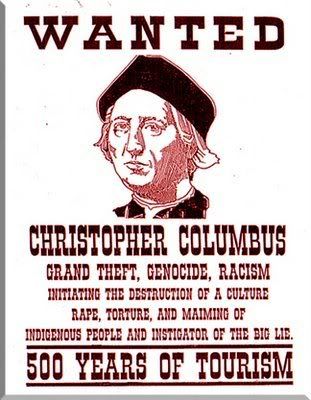
Conflict and Acts of Self-righteous Justice are two of the oldest actions that we as a people take upon another group of people. Whether it be between classes, nations, or religions, History provides us we precedences that can help us make a decision toward the eradication or advancement of such actions.
But when we omit, dilute or other wise tamper with History, how does that affect the outcome of or judgments, or even or identity as a nation?
Even if we start at the beginning of “our History”, we cannot get more than a few pages in without seeing glaring disparites.
We generally begin by stating that Columbus “discovered” America, even though we acknowledge that there were other inhabitants on the land prior to.
This is just the beginning in the ethnocentric interpretation that we allow to be called our “History.”
There is much dispute as to who actually discovered North America, discovered in the context, that they were the first to arrive.
Some say it was the Africans, some say the Norse, some even say that inhabitants of Asia came over as far back as BC. It is an issue of much debate for anthropologists, geologists, and historians alike. But what is not disputed is that it was not Columbus.
Now it could be stated that we use Columbus because it is a solid fact, to which we can rely on and teach to our children-that Columbus did in fact go there. However, there is so much we don't even know about Columbus himself.
His origins, purpose, and likeness are all undetermined. But what we do know is the slaughter he created in Hispaniola.
What we also know, is that he helped bolster the slave trades to such propositions that it helped to wipe-out many Caribbeans, Africans, Cubans, and other natives.
Accelerating the slave market, and the amount of foreign currency and items within the regions.
Some where completely enslaved, such as Hispaniola, while others like Africa saw a bit of profit for a period of time.
Profits that propelled their peoples closer to the “better life.”
We honor the effigy of a man we barely knew that did more confirmed damage than good in the sake of preserving the facts. We preserve no facts,only blood shed, and for this we learn nothing from the mistakes, except how to bury them.

Monday, November 29, 2010
In conclusion of Class
In the assessment of class we are not placing an amount of worth on a person, but setting the limits to their success. Although there are a lucky few who are able to greatly improve their lives and raise their class, most fall do not stray far from it.
The duality that exists within the identification of classes is acknowledging the advantages, and creating programs that are meant to lessen the disadvantages.
We create these programs, aid funds, and other means to lessen this gap, yet we do little to nothing to improve their home lives.
We place such importance of psychological triggers as factors that determine who we are and what we will become. And yet, we allow these conditions go unaccounted for within the lives of children living in poverty.
The class divide is an obvious picture of the disparities in essentials in our society. We can see through class, what challenges the individual will have to face.
Only through cognitive dissonance do we allow systems so obviously detrimental to continue.
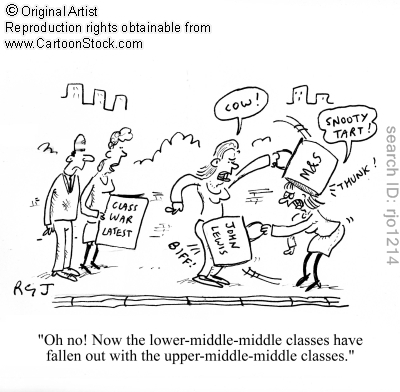
The duality that exists within the identification of classes is acknowledging the advantages, and creating programs that are meant to lessen the disadvantages.
We create these programs, aid funds, and other means to lessen this gap, yet we do little to nothing to improve their home lives.
We place such importance of psychological triggers as factors that determine who we are and what we will become. And yet, we allow these conditions go unaccounted for within the lives of children living in poverty.
The class divide is an obvious picture of the disparities in essentials in our society. We can see through class, what challenges the individual will have to face.
Only through cognitive dissonance do we allow systems so obviously detrimental to continue.

Tuesday, November 9, 2010
Rainbow Pie and the promises of the good life.
Today I watched a lecture on Joe Bageant's memoir/ call to class conscious shifts: Rainbow pie
The title comes from an old hobo's song in the vein of consumerism's lure. The lower classes were offered a veritable “rainbow pie” if they moved to the cities, gave up their farms and grew into consumer culture.

Yet, no one ever got that “rainbow pie”. The rainbow pie, being the luxuries of the upper classes, in exchange for breaking their backs working.
There was formerly a strong sense of community among these small towns. Although many didn't have a lot of money, there was true barter-systems in place. These communities relied on each other to build barns, trade milk for chickens, ect.
And then they moved to the city to work in factories and other minimum wage jobs. Since virtually no one was college educated, many accepted jobs with low wages and no benefits. Many signed mortgages with adjustable rates. This meant that the banks could simply shift the rate, and nearly wipe out the debt paid on a property.
Another finer point of the lecture is the emphasis placed on racism in the south. It is not to say, as he puts it, “all peace and love”, but understanding and cohabitation. Many worked in the same labor line jobs, or low income neighborhoods. He ventures that it is the media, and more so the affluent spreading this myth that all “rednecks” are racist.
Probably the saddest point throughout is the use of low income in wars. Bageant's family had been in every single war since the French and Indian war, yet it still is low income. This is a very rarely expressed concern about are war logic and tactics. The plight of the lower classes fighting the wars sanctioned by the upper.
"FORA.tv - 'Class' with Joe Bageant." FORA.tv - Videos on the People, Issues, and Ideas Changing the Planet. Web. 09 Nov. 2010..
The title comes from an old hobo's song in the vein of consumerism's lure. The lower classes were offered a veritable “rainbow pie” if they moved to the cities, gave up their farms and grew into consumer culture.

Yet, no one ever got that “rainbow pie”. The rainbow pie, being the luxuries of the upper classes, in exchange for breaking their backs working.
There was formerly a strong sense of community among these small towns. Although many didn't have a lot of money, there was true barter-systems in place. These communities relied on each other to build barns, trade milk for chickens, ect.
And then they moved to the city to work in factories and other minimum wage jobs. Since virtually no one was college educated, many accepted jobs with low wages and no benefits. Many signed mortgages with adjustable rates. This meant that the banks could simply shift the rate, and nearly wipe out the debt paid on a property.
Another finer point of the lecture is the emphasis placed on racism in the south. It is not to say, as he puts it, “all peace and love”, but understanding and cohabitation. Many worked in the same labor line jobs, or low income neighborhoods. He ventures that it is the media, and more so the affluent spreading this myth that all “rednecks” are racist.
Probably the saddest point throughout is the use of low income in wars. Bageant's family had been in every single war since the French and Indian war, yet it still is low income. This is a very rarely expressed concern about are war logic and tactics. The plight of the lower classes fighting the wars sanctioned by the upper.
"FORA.tv - 'Class' with Joe Bageant." FORA.tv - Videos on the People, Issues, and Ideas Changing the Planet. Web. 09 Nov. 2010.
Thursday, November 4, 2010
Race vs. Class
The focus of the is section will be the class divide. But before I really get into that, I'd like to address some of the issues of race that play into that.
The thesis, and core of my view of oppression is that we must have a solidarity against oppression. This is to say that in the matters of race, class, sex, and other identities that we are viewed, and unfortunately discriminated against as a result, we need to stand together.
This is not to say that the issues are the same. To better explore this issue, I watched a debate of race vs. class in affirmative action.
The debate featured Julian Bond, chairman of the NAACP; Lee Bollianger, president of Columbia University; Dalton Conley, dean of Social Sciences at New York University; and John McWhorter, of the Manhattan Institute.
The purpose of the debate was to establish how effectively Affirmative Action is solving the disparities of race and class in America.
Although several points and factors were addressed during the debate, I believe most vital were the points made by Julian Bond and Dalton Conley. Although they were on opposing sides of the debate, I believe their ideas work in concert with the main idea of the struggle against institutional oppression.
Bond noted that Affirmative Action was developed to help solve some of the disparities in opportunity cause by institutional racism, slavery, and other historical forms of oppression weathered by Black America.
Although Conley points to the vast differences that can be noted by the net-worth of black and white families, I feel that Bond answered the issue quite poignantly by noting
“They didn't beat Rodney King because he was poor.”
As Bond addresses within the debate, being color blind in America is to be blind to the consequences of race.
Race, sex, and political affiliation are not the same. In a solidarity against oppression, we cannot lump the consequences that surround these issues together. They all fall under the same umbrella of injustice, but the solution and cause of one, is not necessarily the same for another.
In this solidarity we must all accept that we don't have all the answers. We must seek this answers in each other, and as Bollianger addressed when posed the question of race based affirmative action or class/ economic status
“We want both”
Having both is the ultimate goal, and as Conley points out, although diversity in schools is important, these students go back to segregated neighborhoods, and that is the real problem.
"FORA.tv - Race vs. Class: The Future of Affirmative Action." FORA.tv - Videos on the People, Issues, and Ideas Changing the Planet. Web. 04 Nov. 2010..
The thesis, and core of my view of oppression is that we must have a solidarity against oppression. This is to say that in the matters of race, class, sex, and other identities that we are viewed, and unfortunately discriminated against as a result, we need to stand together.
This is not to say that the issues are the same. To better explore this issue, I watched a debate of race vs. class in affirmative action.
The debate featured Julian Bond, chairman of the NAACP; Lee Bollianger, president of Columbia University; Dalton Conley, dean of Social Sciences at New York University; and John McWhorter, of the Manhattan Institute.
The purpose of the debate was to establish how effectively Affirmative Action is solving the disparities of race and class in America.
Although several points and factors were addressed during the debate, I believe most vital were the points made by Julian Bond and Dalton Conley. Although they were on opposing sides of the debate, I believe their ideas work in concert with the main idea of the struggle against institutional oppression.
Bond noted that Affirmative Action was developed to help solve some of the disparities in opportunity cause by institutional racism, slavery, and other historical forms of oppression weathered by Black America.
Although Conley points to the vast differences that can be noted by the net-worth of black and white families, I feel that Bond answered the issue quite poignantly by noting
“They didn't beat Rodney King because he was poor.”
As Bond addresses within the debate, being color blind in America is to be blind to the consequences of race.
Race, sex, and political affiliation are not the same. In a solidarity against oppression, we cannot lump the consequences that surround these issues together. They all fall under the same umbrella of injustice, but the solution and cause of one, is not necessarily the same for another.
In this solidarity we must all accept that we don't have all the answers. We must seek this answers in each other, and as Bollianger addressed when posed the question of race based affirmative action or class/ economic status
“We want both”
Having both is the ultimate goal, and as Conley points out, although diversity in schools is important, these students go back to segregated neighborhoods, and that is the real problem.
"FORA.tv - Race vs. Class: The Future of Affirmative Action." FORA.tv - Videos on the People, Issues, and Ideas Changing the Planet. Web. 04 Nov. 2010.
Tuesday, November 2, 2010
Intro to Class
What is Class?
The question seems simple, but it's far from it.
The convential way that we use to establish what a class entails was through money, but there are other factors that shape this view. These factors include, but are not limited to, education and social status.
Many in society feel that within this country we live in a “classless” society. Yet, we acknowledge those that come from great wealth. We also acknowledge the advantages behind background.
That being said, how much does class determine the course, and opportunities within our lives? Do we share the same concerns on a national level? Are we all living the proverbial "American Dream"?

More importantly, how do we identify ourselves as a solid cohesive experience when the majority of us classify as simply "not rich".
Upper, middle, upper middle, lower, working and all the micro-classes in between.
With so many classifications, where do we stand?
And better yet, who determines that standing?
The question seems simple, but it's far from it.
The convential way that we use to establish what a class entails was through money, but there are other factors that shape this view. These factors include, but are not limited to, education and social status.
Many in society feel that within this country we live in a “classless” society. Yet, we acknowledge those that come from great wealth. We also acknowledge the advantages behind background.
That being said, how much does class determine the course, and opportunities within our lives? Do we share the same concerns on a national level? Are we all living the proverbial "American Dream"?

More importantly, how do we identify ourselves as a solid cohesive experience when the majority of us classify as simply "not rich".
Upper, middle, upper middle, lower, working and all the micro-classes in between.
With so many classifications, where do we stand?
And better yet, who determines that standing?
Wednesday, October 27, 2010
Where to start, where to end?
I am nearing the end of my section on privilege, putting final concepts and reflections together. Yet, it's still a bit jumbled. This can be extremely frustrating, yet rewarding. It's like solving coded messages, so that you may later know what's on the decoder ring. Although a few weeks may seem like a good amount of time, it never is. These packet due dates always just seem to appear.
Wednesday, October 20, 2010
Shocked and or Appalled
While reading White Like Me, I came across a disturbing tid-bit of news. A man and his wife had traveled to the ER of St. Thomas Hospital. The wife was in desperate need of heart surgery. This was the third hospital that they had gone to that night. The reason behind the hospital jumps lies in bigotry.
The husband had a specific demand that no black person be allowed in the OR. His reasoning is that he did not want a black person to see his wife naked.

Whhhhhhaaaaaaatttt???!
As absurd and disturbing as this request was this put the hospital in a precarious situation. Do they honor a clearly racist request, or chance this woman's life to her husband's wanderings?One doctor ultimately agreed, and the surgery was performed under the conditions stated.
Not surprisingly, the Hospital took a lot of heat for allowing this to happen. The doctor, and the Hospital apologized, and the media slowly subsided.
The question that was posed to the Hospital troubled me. What do you do in that situation? I did what I do anytime I have a medical question, I ask my Mom.
My mother is a medical professional of 25+ years, she generally has all the answers to any medical question I pose- administrative or otherwise. Her response put it in a bit more perspective. I asked her if the hospital should have gotten in trouble for their actions. I mean, a woman's life was on the line.
She explained that they deserved what they got because what they did was unethical. The husband's request was unethical, and to honor it was in turn unethical. She said that any of the hospitals he visited could have performed the procedure without his knowledge of the race of the surgeons. They could have just lied.
Given the situation, this does seem to be the route. But then it raises the question: Is it okay to lie for the greater good?
And who determines this good? Which raises one of the main problems within social change. How do you make decisions to heal the problems of the world when it could be at the expense of those you're trying to save?
This story is a metaphor, upon an enigma.....and my brain already hurts just thinking about it.
The husband had a specific demand that no black person be allowed in the OR. His reasoning is that he did not want a black person to see his wife naked.

Whhhhhhaaaaaaatttt???!
As absurd and disturbing as this request was this put the hospital in a precarious situation. Do they honor a clearly racist request, or chance this woman's life to her husband's wanderings?One doctor ultimately agreed, and the surgery was performed under the conditions stated.
Not surprisingly, the Hospital took a lot of heat for allowing this to happen. The doctor, and the Hospital apologized, and the media slowly subsided.
The question that was posed to the Hospital troubled me. What do you do in that situation? I did what I do anytime I have a medical question, I ask my Mom.
My mother is a medical professional of 25+ years, she generally has all the answers to any medical question I pose- administrative or otherwise. Her response put it in a bit more perspective. I asked her if the hospital should have gotten in trouble for their actions. I mean, a woman's life was on the line.
She explained that they deserved what they got because what they did was unethical. The husband's request was unethical, and to honor it was in turn unethical. She said that any of the hospitals he visited could have performed the procedure without his knowledge of the race of the surgeons. They could have just lied.
Given the situation, this does seem to be the route. But then it raises the question: Is it okay to lie for the greater good?
And who determines this good? Which raises one of the main problems within social change. How do you make decisions to heal the problems of the world when it could be at the expense of those you're trying to save?
This story is a metaphor, upon an enigma.....and my brain already hurts just thinking about it.
Tuesday, October 19, 2010
Madeline Levine and the Price of Privilege
Yesterday I took a departure from my readings to watch a lecture by Madeline Levine. Levine is an adolescent psychologist whose clients are generally from affluent backgrounds. In her book, The Price of Privilege, she attempts to decipher why some many how these children fall into emotion problems.

The rate of depression for a high-schooler from an affluent background is three times higher than the national average. The likelihood of substance abuse is 50% more as well.
Although this issue has many psychological triggers and issues, it is a part of a larger social problem. Or rather, it is the result of it.
There is an old saying that "it takes a village to raise a child", whether or not you subscribe to this theory or not, the village plays a role in child rearing. The "village" as it were, being modern society.
When we propagate the importance of achievement over self-worth, we create this divide. These children demonstrate social skills and academic prowess, yet they suffer from a mis-developed sense of self.
Yet, many people don't really care. The common thought is "Why should I care about these kids how have everything, all the opportunity. Who cares if they are depressed?"
These kids go on to hold many vital positions of authority. When we allow this culture to further enforce performance(grades, after school activities) over character and value, we allow this sense of self to deteriorate. As a result, their misery becomes our misery.
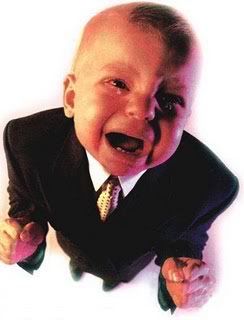
"FORA.tv - Madeline Levine." FORA.tv - Videos on the People, Issues, and Ideas Changing the Planet. Web. 18 Oct. 2010..

The rate of depression for a high-schooler from an affluent background is three times higher than the national average. The likelihood of substance abuse is 50% more as well.
Although this issue has many psychological triggers and issues, it is a part of a larger social problem. Or rather, it is the result of it.
There is an old saying that "it takes a village to raise a child", whether or not you subscribe to this theory or not, the village plays a role in child rearing. The "village" as it were, being modern society.
When we propagate the importance of achievement over self-worth, we create this divide. These children demonstrate social skills and academic prowess, yet they suffer from a mis-developed sense of self.
Yet, many people don't really care. The common thought is "Why should I care about these kids how have everything, all the opportunity. Who cares if they are depressed?"
These kids go on to hold many vital positions of authority. When we allow this culture to further enforce performance(grades, after school activities) over character and value, we allow this sense of self to deteriorate. As a result, their misery becomes our misery.

"FORA.tv - Madeline Levine." FORA.tv - Videos on the People, Issues, and Ideas Changing the Planet. Web. 18 Oct. 2010.
Thursday, October 14, 2010
How privilege occurs
How does privilege happen: as a consequence of the social system that we live. People make these systems, but are not the system itself. However, the systems would cease to exist without participants. A social system can be a lot of different things: a university, workplace, family etc.
These systems are created, or developed based on the actions of those involved with it. The participation of this system can be unique for the individuals involved. For example, two students could attend the same university. One could have an “A” average , while the other could be failing.
Although the both attend the same school, their experience within this social system would be quite different. Your grade in Academia, is generally the standard they hold of you,and your work. Having a lower grade than the other student may mean that they are not as educated, but it could be for a number of other reasons. These reasons could include poor attendance, more intense classes, etc. So, we have two individuals involved with a social system, with different experiences within it.
Social systems make up the relationships we maintain, and the world that we live in. But, because social systems have rules that result in distinctions between individuals, certain privileges arise.
For instance, if I were to walk down the street backwards, this would cause a bit of a stir. Not that walking backwards would cause fear, or be intimidating. But people within the social system of community, would not be use to this behavior.
Following the norm is what gives you privileges within social systems. We reward the expectable experience.

When we encounter “otherness” it can frighten, startle, arouse, or even enrage. But in modern society, what do we accept, and what do we shun? More importantly, to whose benefit do we do this?
These systems are created, or developed based on the actions of those involved with it. The participation of this system can be unique for the individuals involved. For example, two students could attend the same university. One could have an “A” average , while the other could be failing.
Although the both attend the same school, their experience within this social system would be quite different. Your grade in Academia, is generally the standard they hold of you,and your work. Having a lower grade than the other student may mean that they are not as educated, but it could be for a number of other reasons. These reasons could include poor attendance, more intense classes, etc. So, we have two individuals involved with a social system, with different experiences within it.
Social systems make up the relationships we maintain, and the world that we live in. But, because social systems have rules that result in distinctions between individuals, certain privileges arise.
For instance, if I were to walk down the street backwards, this would cause a bit of a stir. Not that walking backwards would cause fear, or be intimidating. But people within the social system of community, would not be use to this behavior.
Following the norm is what gives you privileges within social systems. We reward the expectable experience.

When we encounter “otherness” it can frighten, startle, arouse, or even enrage. But in modern society, what do we accept, and what do we shun? More importantly, to whose benefit do we do this?
Tuesday, October 12, 2010
Intro to Section III
After closing out my study on Black America, I am moving onto to bit of a hectic study. This study being privilege, assumed stereotypes within privilege, and its relation to the class system.
The class system is going to be the fourth section. The class system itself could be a endless study, but for the sake of the semester's work(and my sanity) it's going to have its own section entirely.
The focus of this section will be a deeper look into how perception plays out socially. More specifically, what you think about when you see this.

I am curious to see what the perceptions surrounding this topic lead.
Context and objectivity can be everything, but does that change how people treat us?
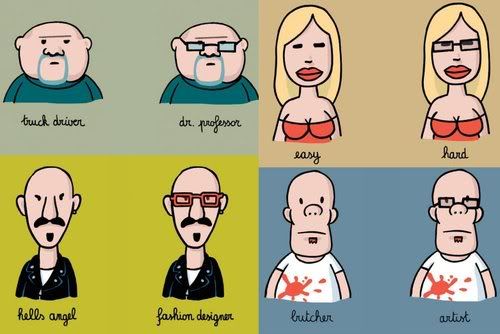
The class system is going to be the fourth section. The class system itself could be a endless study, but for the sake of the semester's work(and my sanity) it's going to have its own section entirely.
The focus of this section will be a deeper look into how perception plays out socially. More specifically, what you think about when you see this.

I am curious to see what the perceptions surrounding this topic lead.
Context and objectivity can be everything, but does that change how people treat us?

Wednesday, October 6, 2010
"Sha-Clack-Clack" Saul Williams
"If I could find the spot where truth echoes
I would stand there and whisper memories of my children’s future
I would let their future dwell in my past
so that I might live a brighter now
Now is the essence of my domain and it contains
all that was and will be
And I am as I was and will be because I am and always will be
that nigga
I am that nigga
I am that nigga
I am that timeless nigga that swings on pendulums like vines
through mines of boobytrapped minds that are enslaved by time
I am the life that supersedes lifetimes, I am
It was me with serpentine hair and a timeless stare
that with immortal glare turned mortal fear into stone time capsules
They still exist as the walking dead, as I do
The original sulphurhead, symbol of life and matriarchy
severed head Medusa, I am
I am that nigga
I am that nigga!
I am that nigga!!
I am a negro! Yes negro, negro from necro meaning death
I overcame it so they named me after it
And I be spitting at death from behind
and putting “Kick Me” signs on it’s back
because I am not the son of Sha-Clack-Clack
I am before that, I am before
I am before before
Before death is eternity, after death is eternity
There is no death there’s only eternity
And I be riding on the wings of eternity
like HYAH! HYAH! HYAH! Sha-Clack-Clack
but my flight doesn’t go undisturbed
Because time makes dreams defer
And all of my time fears are turning my days into daymares
And I live daymares reliving nightmares
of what taunted my past
Sha-Clack-Clack, time is beatin my ass
And I be havin dreams of chocolate covered watermelons
Filled with fried chickens like pinatas
With little pickaninny sons and daughters
standing up under them with big sticks and aluminum foil
Hittin em, tryin to catch pieces of fallin fried chicken wings
And Aunt Jemima and Uncle Ben are standing in the corners
with rifles pointed at the heads of the little children
“Don’t shoot the children,” I shout, “don’t shoot the children!”
but they say it’s too late
They’ve already been infected by time
But that sh** is before my time
I need more time
I need more time
But it’s too late
They start shooting at children and killing them!
One by one, two by two, three by three, four by four
Five by five, six by six, but
my spirit is growing seven by seven
Faster than the speed of light
Cause light only penetrates the darkness that’s already there
and I’m already there
I’m here at the end of the road
which is the beginning of the road beyond time, but
where my niggaz at? (Oh sh**!)
Oh sh**, don’t tell me my niggaz got lost in time
My niggaz are dying before their time
My niggaz are serving unjust time
My niggaz are dying because of.. time"
Sunday, October 3, 2010
A bit lighter,a bit bolder
Things aren't all grim in black-social commentary-land.
There's always the world of animation.

With the contrasting archetypal characters of society,up to the minute slang and references to popular culture this show has it all-including media backlash.
The show centers around two brothers Huey and Riley Freeman.
Huey(named after Huey P. Newton,co-founder of the black panthers) is an Afrocentric freedom fighter. Complete with black power glove of justice.
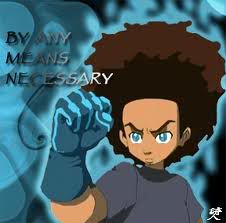
Huey often quarrels with his younger brother Riley(Huey's gangster-lifestyle-promoting contemporary).

The show covers everything from the R. Kelly trail, the election of Obama, to serious analysis of the self-proclaimed “Black Entertainment Network.”
Although critics like Al Sharpton say that the show is polluting social opinion it does quite the opposite. It raises the questions and conversations that are necessary for the “post-modernism” that hooks stresses for social change.
The more we are afraid to talk about the issues,the less will ever get done.
There's always the world of animation.

With the contrasting archetypal characters of society,up to the minute slang and references to popular culture this show has it all-including media backlash.
The show centers around two brothers Huey and Riley Freeman.
Huey(named after Huey P. Newton,co-founder of the black panthers) is an Afrocentric freedom fighter. Complete with black power glove of justice.

Huey often quarrels with his younger brother Riley(Huey's gangster-lifestyle-promoting contemporary).

The show covers everything from the R. Kelly trail, the election of Obama, to serious analysis of the self-proclaimed “Black Entertainment Network.”
Although critics like Al Sharpton say that the show is polluting social opinion it does quite the opposite. It raises the questions and conversations that are necessary for the “post-modernism” that hooks stresses for social change.
The more we are afraid to talk about the issues,the less will ever get done.
Friday, October 1, 2010
Willie Dynamite: Pimps,Hoes,and Fur

There's no doubt that we all face a great deal of conditioning. Without it,we wouldn't even know to call ourselves “black”, “white”, or anything else. Conditioning is ,traditionally passed down from parent to child;friend to friend; man to man. However, with the rise of technology, we have so much more exposure to other stimuli and influence. From our :television, phone, or mp3 player; We're plugged in.
So with the messages of our friends,loved ones, favorite performer, floating about through our day, how do we form an opinion. Let's start with movies. More specifically, hyper-personified “reality” based movies.
Taking a break from reading hooks and Williams, I figured I'd “field” investigate so to speak. And what better place to start then the blaxplotation films of the 70's. After looking through the scattered history, reading bios, etc I choose Willie Dynamite.
With larger than life characters,costumes, and glitter. The costume designer probably broke a thumb bedazzling this movie.
It promotes crime as business, indulgence, and other hedonistic endeavors. However it does end on a somber note. The social worker(as self-proclaimed Ralph Nader for hooker) helps a hooker who decides to “leave the game” a bit too late, and a broke Willie Dynamite.
Although many feel that these movies never should been made. There's a lighter note that not many people consider.
I browsed around blacktree.tv and found a film the served as a loving homage to blaxplotation featuring the great Arsenio Hall.
http://my.blacktree.tv/profiles/blogs/arsenio-hall-amp-michael-jai
In the interview they explain,and defend, their stance on the genre.
Blaxplotation helped to save Hollywood. They were cheap to produce, cheap to write, and made a lot at the box office.
Although the images and ideals of these films is usually not very conducive to a productive lifestyle. There were at least black. They were real live black people on screen, living life, not just being maids. It's not the best role,but it's a start.
Monday, September 27, 2010
What I will do,what I won't do,and about a thousand why's
Reconstruction, The Emancipation Proclamation, Amendments 13-15, and The Civil Rights Movement were in the vain of ensuring that “all men were created equal” was a way of life in America.
Why do so many underprivileged black students so unmotivated when it comes to education?
This is no stereotype or bigoted conjecture,it's sadly a reality.
Through my experiences throughout my schooling, I made friends from all sorts of backgrounds, but most throughout high school came from poverty-level situations. I felt the hopelessness that some of them had to face daily. It's called “the trap” for a reason.
Not all of my friends let the “trap” get them down, one even went to Harvard, on a nearly full scholarship. Sadly, many gave up on school during or after high school. Many are still struggling “just to get by”.
This cycle is the truth for far too many people in this country.
Why is black on black crime the leading cause of death in black males from poor areas?
Why is intelligence so looked down upon in the ghetto?
Why are so many turning to crime and violence,completing the cycle in succession?
What is the cost of ideology,and how do we fix this?
hooks attempts to “be the voice” for black men in America. It's not that they can't speak for themselves, but many don't. There is such an emphasis on maintaining the image of the strong black male.
Or in the words of Saul Williams
“Now here's a little message for you
All you balla playas got some insecurities too
That you could cover up, bling it up
Cash in and ching ching it up
Hope no one will bring it up
Lock it down and string it up
Or you can share your essence with us
'Cause everything about you couldn't be rugged and ruff
And even though you tote a glock and you're hot on the streets
If you dare to share your heart, we'll nod our heads to its beat”
For the purposes of my research into this the “progression” from reconstruction to present society will not be discussed within the blog,but within the packets.
This is a decision I have made after a lot of intense thought on the matter. In the short time that I have really been “diving into” the issues, many truths have come to the forefront. I find the most guiding one at this juncture, is that this topic is bigger than any one idea,event,or “expert” opinion.
The “nice black man”,thug, hustler, CEO, mail-man down the street, are cut from the same cloth and brought into conditioning just like anyone else in this world.
However, as Shawn Taylor and bell hooks explain much better than I can, that there is a “self-hate” pushed on black men that is environmentally enforced.
The stigmas,stereotypes, and other forms of misinformation that were propagated regarded black men as brutes,who could not feel a full scope of emotions. That they were prone to rage and lust,not profound thought or feeling. This was in part a way to show the white slave owner as a “keeper” of this “beast”. That the black man was the burden of the white to control, for the greater good. Even as things have progressed and things have gotten “better”,there is still undeniable “cracks” that must be attended to.
This is not a matter of opinion. Taylor posed a question in his lecture that I can't shake from my mind.
“Why is it that black men will involve each other in each others [fights,or violence against another], but not loan each other 5 dollars?”
He proposes that is because they have been conditioned to see themselves as nothing but “big,black tools”. And you know,as of this juncture...I'd have to agree,that conditioning did this,but I feel it's deeper than even he has really touched on.
Additional references
Saul Williams. Fader Label, 2004.
FORA.tv - Shawn Taylor: Misadventures in Race & Masculinity." FORA.tv - Videos on the People, Issues, and Ideas Changing the Planet. 28 Sept. 2010.
Why do so many underprivileged black students so unmotivated when it comes to education?
This is no stereotype or bigoted conjecture,it's sadly a reality.
Through my experiences throughout my schooling, I made friends from all sorts of backgrounds, but most throughout high school came from poverty-level situations. I felt the hopelessness that some of them had to face daily. It's called “the trap” for a reason.
Not all of my friends let the “trap” get them down, one even went to Harvard, on a nearly full scholarship. Sadly, many gave up on school during or after high school. Many are still struggling “just to get by”.
This cycle is the truth for far too many people in this country.
Why is black on black crime the leading cause of death in black males from poor areas?
Why is intelligence so looked down upon in the ghetto?
Why are so many turning to crime and violence,completing the cycle in succession?
What is the cost of ideology,and how do we fix this?
hooks attempts to “be the voice” for black men in America. It's not that they can't speak for themselves, but many don't. There is such an emphasis on maintaining the image of the strong black male.
Or in the words of Saul Williams
“Now here's a little message for you
All you balla playas got some insecurities too
That you could cover up, bling it up
Cash in and ching ching it up
Hope no one will bring it up
Lock it down and string it up
Or you can share your essence with us
'Cause everything about you couldn't be rugged and ruff
And even though you tote a glock and you're hot on the streets
If you dare to share your heart, we'll nod our heads to its beat”
For the purposes of my research into this the “progression” from reconstruction to present society will not be discussed within the blog,but within the packets.
This is a decision I have made after a lot of intense thought on the matter. In the short time that I have really been “diving into” the issues, many truths have come to the forefront. I find the most guiding one at this juncture, is that this topic is bigger than any one idea,event,or “expert” opinion.
The “nice black man”,thug, hustler, CEO, mail-man down the street, are cut from the same cloth and brought into conditioning just like anyone else in this world.
However, as Shawn Taylor and bell hooks explain much better than I can, that there is a “self-hate” pushed on black men that is environmentally enforced.
The stigmas,stereotypes, and other forms of misinformation that were propagated regarded black men as brutes,who could not feel a full scope of emotions. That they were prone to rage and lust,not profound thought or feeling. This was in part a way to show the white slave owner as a “keeper” of this “beast”. That the black man was the burden of the white to control, for the greater good. Even as things have progressed and things have gotten “better”,there is still undeniable “cracks” that must be attended to.
This is not a matter of opinion. Taylor posed a question in his lecture that I can't shake from my mind.
“Why is it that black men will involve each other in each others [fights,or violence against another], but not loan each other 5 dollars?”
He proposes that is because they have been conditioned to see themselves as nothing but “big,black tools”. And you know,as of this juncture...I'd have to agree,that conditioning did this,but I feel it's deeper than even he has really touched on.
Additional references
Saul Williams. Fader Label, 2004.
FORA.tv - Shawn Taylor: Misadventures in Race & Masculinity." FORA.tv - Videos on the People, Issues, and Ideas Changing the Planet. 28 Sept. 2010
Friday, September 24, 2010
Intro to Section II w/ video
Due to time constraints, the "synopsis" of social events through People's History will have to be cut short. This is to allow adequate time for the second section of my work this semester.
The second section's focus will be Black America, mainly the history,stereotypes,and social commentary. I am "kicking it off" with bell hooks' We real cool.
The book provides a concerned commentary on the image of black people,namely men,in American society and culture. Racism is racism,even if it's subtle.
Or rather,appears subtle.
So to begin,I bring you one of my favorite youtube videos,which I feel sums up modern racism in America.(NSFW Language)
The second section's focus will be Black America, mainly the history,stereotypes,and social commentary. I am "kicking it off" with bell hooks' We real cool.
The book provides a concerned commentary on the image of black people,namely men,in American society and culture. Racism is racism,even if it's subtle.
Or rather,appears subtle.
So to begin,I bring you one of my favorite youtube videos,which I feel sums up modern racism in America.(NSFW Language)
Monday, September 13, 2010
The Production of Production
From the late 1870's through the beginning of the 1900's was a rich era of production in American History. Well, not so much the production,as the production of production.
The system of Taylor-ism,which was essentially to reduce production into lines and in turn make factory workers more interchangeable,was on the rise. This reduced wages, worked people to the bone,and yet most of them still had nothing to show for it.
As cliché as it may seem now in 2010, The Jungle by Uptown Sinclair really is the best depiction of the inter-workings of Taylor-ism and the people how become cogs within it. Despite it being historical fiction,the accounts of the filth and horror are based on the real meat packing district.
Also gaining some fans was the socialist movement. Writers like Jack London,Du Bois and others probed people to ask “Why they were working themselves ragged for nothing?”
And thus the almost incestuous rivalry of socialism vs. capitalism really picked up the pace.
The socialists stated WWI as an imperialist war.This was not too outlandish to say, between the boundary disputes and spheres of influence in Alsace Lorraine, Africa,The Middle East,and Balkans:something was going to happen. Socialism mainly attacked the rift between classes capitalism caused. This war certainly was not going to help this rift either.
As Du Bois so eloquently puts in The African Roots of War
“It is no longer simply the merchant prince,or aristocratic monopoly,or even the employing class,that is exploiting the world: it is the nation, a new democratic nation composed of united labor and capital.”
As technology develops,so do burgeoning businesses.
Steam and Electricity replaced human labor.
Iron replaced wood.
Steel replaced Iron.
And the industrial world drove on.
With over 14 million immigrants from 1900-1920, there were many to take on the task of this development. They made the copper wire, mined the coal,ect, yet they had very little to live off of. And things were about to get a bit grimmer still.
The system of Taylor-ism,which was essentially to reduce production into lines and in turn make factory workers more interchangeable,was on the rise. This reduced wages, worked people to the bone,and yet most of them still had nothing to show for it.
As cliché as it may seem now in 2010, The Jungle by Uptown Sinclair really is the best depiction of the inter-workings of Taylor-ism and the people how become cogs within it. Despite it being historical fiction,the accounts of the filth and horror are based on the real meat packing district.
Also gaining some fans was the socialist movement. Writers like Jack London,Du Bois and others probed people to ask “Why they were working themselves ragged for nothing?”
And thus the almost incestuous rivalry of socialism vs. capitalism really picked up the pace.
The socialists stated WWI as an imperialist war.This was not too outlandish to say, between the boundary disputes and spheres of influence in Alsace Lorraine, Africa,The Middle East,and Balkans:something was going to happen. Socialism mainly attacked the rift between classes capitalism caused. This war certainly was not going to help this rift either.
As Du Bois so eloquently puts in The African Roots of War
“It is no longer simply the merchant prince,or aristocratic monopoly,or even the employing class,that is exploiting the world: it is the nation, a new democratic nation composed of united labor and capital.”
As technology develops,so do burgeoning businesses.
Steam and Electricity replaced human labor.
Iron replaced wood.
Steel replaced Iron.
And the industrial world drove on.
With over 14 million immigrants from 1900-1920, there were many to take on the task of this development. They made the copper wire, mined the coal,ect, yet they had very little to live off of. And things were about to get a bit grimmer still.
Thursday, September 9, 2010
Slavery,Civil War,and Prejudice
Zinn examines slavery very critically in People's History. Slavery was a very profitable and complicated issue in American History. Slavery was not only a large scale profit machine,but an open crime against humanity. The fear of insurrection was present,but not as palpable as you may think. Being born into bondage,put in a box
The fear of the free and enslaved black of America joining with the lower class toward some cause became very apparent during the civil war.
In traditional elementary schooling and onwards, the civil war is examined,explained,and put onto tests. One of the main reasons cited is generally slavery. This was a factor,however there were so many other things tying into it.
The fires brewing against slavery from the fugitive slave act of 1850 to the 1857 decision of Dred Scott-property not person.
The economic parallels developing from the businesses of the North and South
The debates spawning from the 3/5ths decision and other legal precedents which upset the oder of population to government representation.
The North favored free land,labor,market and the intuition of a national bank.
The South opposed these ideas because of the economic leverage the North would gain from them.
Civil war ensued,and many lost their lives. The brutality was unprecedentedly massive and is still staggering. There were many high and low points for both sides,but a pivotal turn in the war came in 1865.
1865 senate signed the emancipation proclamation which motivated even more black enlistment in the army. In affect more riots,conspiracy,and revolts occurred in the South soon after the news had hit the papers.
To counter as well as raise more recruits in generally Davis signed the “Negro Soldier Law”. The law would allow “Negroes” to enter the army. In exchange for service,the soldier would be granted freedom after the war if given the consent by his government and owner. This,not surprisingly did very little to help the south.
1866 brought a bout the Klu Klx Klan and other hate-based organizations. Lynchings,raids,rape,and murder became very prominent from the late 1860s through the early 18070s.
Flash ahead:
100 years after the emancipation proclamation Zinn was a teacher in a Negro school called Spelman College. A college on the verge of common white suburbia,surrounded but barbed wire-curved not to keep people out,but to keep them in.
He details many experiences dealing with racism and ignorance within that area in You Can't Be Neutral... even directed at him for being a white man in the south. But I think what is most poignant a bout this section of the book is a reflection about the process of revolution.
Zinn ventures that “[revolution] is not a completed event,but an ongoing process.” Considering that 100 years after the emancipation proclamation there were still lynchings, and 54 years after that racism is still lingering its ugly head.
Note to Self: Read
Black Reconstruction in America
The Negro
Color and Democracy: Colonies and Peace
Among other works of W.E.B. Du Bois
Tuesday, September 7, 2010
The [Poor White]Women's Movement
It's strange to think how drastically different one aspect of your government profile would affect the rest of your life in the early days of America. For example, the difference between a white man and a black man,a poor white man and a rich one, etc. But nothing was more drastic then the difference between a rich white woman and the rest of the world.
Being rich in colonial days was not only apparent by your speech,but literally almost every faucet of your life. Everything on you,or that even touched your skin was completely different(or at least priced drastically differently) to the garb of the “common”folk. Status was ever apparent. And if you had status,you did not work. And if you did “work”(merchants/bankers/factory runners) it certainly wasn't back-breaking. That in mind, what's your wife to do?
Nothing,and that's what most of them did. And for them I am sure it was just fine,so why vote?
The women's movement was put into motion mostly by poor white women who were sick of working to come home to clean and be scolded. Not only be scolded,but denied the right to divorce,entrance into college,own property,and to your own wages. It was a fantastically complicated psychological trap. However, the bottom line remained the same: cook,clean,and live within your little box.
So,the poor white women rose up and by the late 1840s the famous Seneca Falls meetings were in full swing. These and the Ohio Women's Rights Convention that really bolstered the movement.
It was at Ohio Women's Rights Convention in 1851 that Sojourner Truth gave her fateful “Ain't I a woman?” speech. What I love about it,is it's simplicity. It's so openly “Hello,black women exist too,and get nothing but dirt in the face to show for it.”
Sometimes it really can be a battle trying to phrase things gently,tactfully,and avoid alienating anyone. However,other times you need to shout at the top of your lungs to give volume to your voice in concert with all voices silenced.
"Ain't I a Woman? Sojourner Truth, 1851." Women's History - Comprehensive Women's History Research Guide. Web. 07 Sept. 2010..
Being rich in colonial days was not only apparent by your speech,but literally almost every faucet of your life. Everything on you,or that even touched your skin was completely different(or at least priced drastically differently) to the garb of the “common”folk. Status was ever apparent. And if you had status,you did not work. And if you did “work”(merchants/bankers/factory runners) it certainly wasn't back-breaking. That in mind, what's your wife to do?
Nothing,and that's what most of them did. And for them I am sure it was just fine,so why vote?
The women's movement was put into motion mostly by poor white women who were sick of working to come home to clean and be scolded. Not only be scolded,but denied the right to divorce,entrance into college,own property,and to your own wages. It was a fantastically complicated psychological trap. However, the bottom line remained the same: cook,clean,and live within your little box.
So,the poor white women rose up and by the late 1840s the famous Seneca Falls meetings were in full swing. These and the Ohio Women's Rights Convention that really bolstered the movement.
It was at Ohio Women's Rights Convention in 1851 that Sojourner Truth gave her fateful “Ain't I a woman?” speech. What I love about it,is it's simplicity. It's so openly “Hello,black women exist too,and get nothing but dirt in the face to show for it.”
Sometimes it really can be a battle trying to phrase things gently,tactfully,and avoid alienating anyone. However,other times you need to shout at the top of your lungs to give volume to your voice in concert with all voices silenced.
"Ain't I a Woman? Sojourner Truth, 1851." Women's History - Comprehensive Women's History Research Guide. Web. 07 Sept. 2010.
Sunday, September 5, 2010
The Color-line,Class Consciousness,and Rebellion
The color lines were very clear in colonial America. If you were not white, you had little,to no rights no matter what part of the country you were in.
Even the poor white colonists of the era,like the third of the population that were farmers, felt that they too were being abused by the system. Anyone who did not own property could not vote. This included: sailors,apprentices,servants,women,black,journeymen,etc.
The general consensus the lower class as well as anyone who could not vote,was that they were all working toward the gain of another.
This class conscious fear, was due mainly to the events of Bacon's Rebellion.
It was another bloody fiasco carried out because of the resentment against the rich,and hatred of the Indians.
Bacon's Rebellion was lead by,and for farmers. Granted relations between farmers and Indians had only worsened due to the changes in Indian policy, this rebellion was a bit zealous. It was supposed to embody the ideas behind Bacon's “Declaration of the People”[July 1676]. But rather it only served to further divided people against the Indians.
Even the poor white colonists of the era,like the third of the population that were farmers, felt that they too were being abused by the system. Anyone who did not own property could not vote. This included: sailors,apprentices,servants,women,black,journeymen,etc.
The general consensus the lower class as well as anyone who could not vote,was that they were all working toward the gain of another.
This class conscious fear, was due mainly to the events of Bacon's Rebellion.
It was another bloody fiasco carried out because of the resentment against the rich,and hatred of the Indians.
Bacon's Rebellion was lead by,and for farmers. Granted relations between farmers and Indians had only worsened due to the changes in Indian policy, this rebellion was a bit zealous. It was supposed to embody the ideas behind Bacon's “Declaration of the People”[July 1676]. But rather it only served to further divided people against the Indians.
Wednesday, September 1, 2010
Off topic: On Zinn
Let's steer away from the main content of the book a bit and look at context.
Zinn expresses a need for “full-disclosure” in education,specifically in History.
I think it's kind of a funny thing to consider, because of the context of the book.
Throughout Chapters one and two of P.H. , Zinn puts loads of emphasis on de-heroism for Columbus and the brutalities of the era. He briefly touches on the policies behind atrocity.
I like Zinn's ideas,but I feel his tone is too brash. I think it's a lot easier to digest after reading the intro to You Can't Be Neutral On..... Zinn takes time in this book to delve further into not only his life,but the motivations that drove his ideas,and manner teaching. Although he and I would disagree on many things surrounding these events,I am sure we would agree on the main focus on this history in general
“Remember the victims”.
Zinn expresses a need for “full-disclosure” in education,specifically in History.
I think it's kind of a funny thing to consider, because of the context of the book.
Throughout Chapters one and two of P.H. , Zinn puts loads of emphasis on de-heroism for Columbus and the brutalities of the era. He briefly touches on the policies behind atrocity.
I like Zinn's ideas,but I feel his tone is too brash. I think it's a lot easier to digest after reading the intro to You Can't Be Neutral On..... Zinn takes time in this book to delve further into not only his life,but the motivations that drove his ideas,and manner teaching. Although he and I would disagree on many things surrounding these events,I am sure we would agree on the main focus on this history in general
“Remember the victims”.
Tuesday, August 31, 2010
Examining the beginning as a means to understanding the end
People's History begins with a bare roots look at the events leading to and following Columbus' first voyage to North America. This topic is definitely at the core of all text on American History. That being said, heres the basics:
I.Christopher Columbus' voyage was financed by the King and Queen of Spain. However, although not expressed in this text,the Queen was interested more-so than the King because of the spices,jewels,and more importantly the gold of the stories of the voyages of Marco Polo.
II.At this juncture of History,Constantinople[ modern day ] had been conquered by the turks. So this left the Eastern Mediterranean and the land mass of Asia. The problem with Asia is that the land routes were completely controlled by Asia.
III.Columbus traveled to North America and returned to Madrid in the thought that he had reached India. I am not reiterating this purely for the terminology of why they are called “Indians” in this paper instead of “Native Americans”. The purpose is to emphasize that this term is an important part of this historical account.
That being said let's move into the bulk of this account.
When Columbus arrived in the “New World” as it were, he was met by the Arawak Indians. The Arawaks produced corn,yams,gold jewelery among other things. But the Spaniards came with iron swords and other foreign wares. Some were taken aboard to Hispaniola (modern day Haiti). Upon making his fort called Navidad (or Christmas),he returned for Madrid.
What's important to remember is that Columbus returned with virtually no gold. Not to say he had no gold,but he sold the King and Queen outlandish claims to finance this trip. He did however have indigenous people. This is where the history gets a bit shaky.
The King and Queen decided to finance yet another voyage. This voyage had 17 ships and 12,000 men. This journey took them through the Caribbean to Navidad(the fort) then to Cicao(within modern day Haiti)
The horrors of Hispaniola have never been a happy sight in any historical account I've seen in any texts. Although then numbers of those lost in the mines,encomiendas(slave labor estates) can never be truly exact it is estimated that around 50,000 Arawak Indians were lost from 1515 to 1650.
Zinn chronicles the forging of Navidad (Columbus' fort in Hispaniola from the remains of the Santa Maria) although way to the Las Casas mines in the mid 1650s. The reason I say the history gets a bit shaky is that there were not too many report as far as conditions and mortality rate being done in that area,or that time for that matter. Although many of the horror was definitely from working within the mines,some could be attributed to that in conjunction with illness.
Immunity systems are tricky little things that we are still in that dark about for the most part. What can be surmised though is that this colonial presence was definitely only beginning to take it's toll on this culture.
The end of the first chapter touches on the events of Jamestown,but more specifically the Pilgrims of New England. It's been widely expressed and openly acknowledged that the Puritans were a very religiously devote folk. And that a good bit of them thought of the Indians as savages. This sense of entitlement strings of from the entire Elizabethan complexes of “Light” and “Dark”. It was a wide notion of the time, that black the word itself begets thoughts of dirtiness,and spoiling.
I think it's important to remember this complex,and others like it. By the account of Samuel Eliot Morison,harvard historian, Columbus was a religiously devote man. This can also be said of Constantinople himself. He considered his conquest of Constaninopolis was from a religious experience.
I think the most important part of this journey through History will be to remember things like this. To remember that all these events take place in a context. All of these events are people vs. people,action vs. action, ect. However they all had motivations and hearts and minds invested in them for many reasons.
I.Christopher Columbus' voyage was financed by the King and Queen of Spain. However, although not expressed in this text,the Queen was interested more-so than the King because of the spices,jewels,and more importantly the gold of the stories of the voyages of Marco Polo.
II.At this juncture of History,Constantinople[ modern day ] had been conquered by the turks. So this left the Eastern Mediterranean and the land mass of Asia. The problem with Asia is that the land routes were completely controlled by Asia.
III.Columbus traveled to North America and returned to Madrid in the thought that he had reached India. I am not reiterating this purely for the terminology of why they are called “Indians” in this paper instead of “Native Americans”. The purpose is to emphasize that this term is an important part of this historical account.
That being said let's move into the bulk of this account.
When Columbus arrived in the “New World” as it were, he was met by the Arawak Indians. The Arawaks produced corn,yams,gold jewelery among other things. But the Spaniards came with iron swords and other foreign wares. Some were taken aboard to Hispaniola (modern day Haiti). Upon making his fort called Navidad (or Christmas),he returned for Madrid.
What's important to remember is that Columbus returned with virtually no gold. Not to say he had no gold,but he sold the King and Queen outlandish claims to finance this trip. He did however have indigenous people. This is where the history gets a bit shaky.
The King and Queen decided to finance yet another voyage. This voyage had 17 ships and 12,000 men. This journey took them through the Caribbean to Navidad(the fort) then to Cicao(within modern day Haiti)
The horrors of Hispaniola have never been a happy sight in any historical account I've seen in any texts. Although then numbers of those lost in the mines,encomiendas(slave labor estates) can never be truly exact it is estimated that around 50,000 Arawak Indians were lost from 1515 to 1650.
Zinn chronicles the forging of Navidad (Columbus' fort in Hispaniola from the remains of the Santa Maria) although way to the Las Casas mines in the mid 1650s. The reason I say the history gets a bit shaky is that there were not too many report as far as conditions and mortality rate being done in that area,or that time for that matter. Although many of the horror was definitely from working within the mines,some could be attributed to that in conjunction with illness.
Immunity systems are tricky little things that we are still in that dark about for the most part. What can be surmised though is that this colonial presence was definitely only beginning to take it's toll on this culture.
The end of the first chapter touches on the events of Jamestown,but more specifically the Pilgrims of New England. It's been widely expressed and openly acknowledged that the Puritans were a very religiously devote folk. And that a good bit of them thought of the Indians as savages. This sense of entitlement strings of from the entire Elizabethan complexes of “Light” and “Dark”. It was a wide notion of the time, that black the word itself begets thoughts of dirtiness,and spoiling.
I think it's important to remember this complex,and others like it. By the account of Samuel Eliot Morison,harvard historian, Columbus was a religiously devote man. This can also be said of Constantinople himself. He considered his conquest of Constaninopolis was from a religious experience.
I think the most important part of this journey through History will be to remember things like this. To remember that all these events take place in a context. All of these events are people vs. people,action vs. action, ect. However they all had motivations and hearts and minds invested in them for many reasons.
Monday, August 30, 2010
I. Introduction
I'd like to start this by first expressing some of the focus within this blog.
It will not be: to side with any author,party,event; to make brash opinions; to alienate any group or groups;or to come to any assumptions about the parties involved.I feel that in going down those routes it will only foster more biases.
What I would like expressed within this blog is reevaluation. More specifically, an open reevaluation.
My study will be focused on gaining more perspective on American History.Through a "ground-up" approach to this subject matter I will not only become better grounded in the history that shapes us,but the social events that spawn from said history.
The core of the study will inherently be diversity and education. Although,the hope is to bridge them together more effectively for students and their background.
I will contribute thoughts,reflections,and other points of interest in a blog throughout this process. The blog entries will be simple "check-ins" with the subject matter I have read thus far. This will be not only to better work through the thought processes involved,but to have "snapshots" so to speak of my place within these topics.These blog entries will also identify any added informative media(supplementary articles,lecture videos,etc)
I look forward to starting this endeavor by reading People's History by Howard Zinn later on this afternoon.
It will not be: to side with any author,party,event; to make brash opinions; to alienate any group or groups;or to come to any assumptions about the parties involved.I feel that in going down those routes it will only foster more biases.
What I would like expressed within this blog is reevaluation. More specifically, an open reevaluation.
My study will be focused on gaining more perspective on American History.Through a "ground-up" approach to this subject matter I will not only become better grounded in the history that shapes us,but the social events that spawn from said history.
The core of the study will inherently be diversity and education. Although,the hope is to bridge them together more effectively for students and their background.
I will contribute thoughts,reflections,and other points of interest in a blog throughout this process. The blog entries will be simple "check-ins" with the subject matter I have read thus far. This will be not only to better work through the thought processes involved,but to have "snapshots" so to speak of my place within these topics.These blog entries will also identify any added informative media(supplementary articles,lecture videos,etc)
I look forward to starting this endeavor by reading People's History by Howard Zinn later on this afternoon.
Subscribe to:
Comments (Atom)